
Thursday 3 September 2026
New Research Links Body Fat Distribution to Heart Health and Disease Risks
New research by Keble Fellow Professor Qiang Zhang’s team has found that where fat is stored in the body may be just as important as overall weight in determining a person’s risk of developing serious health conditions.
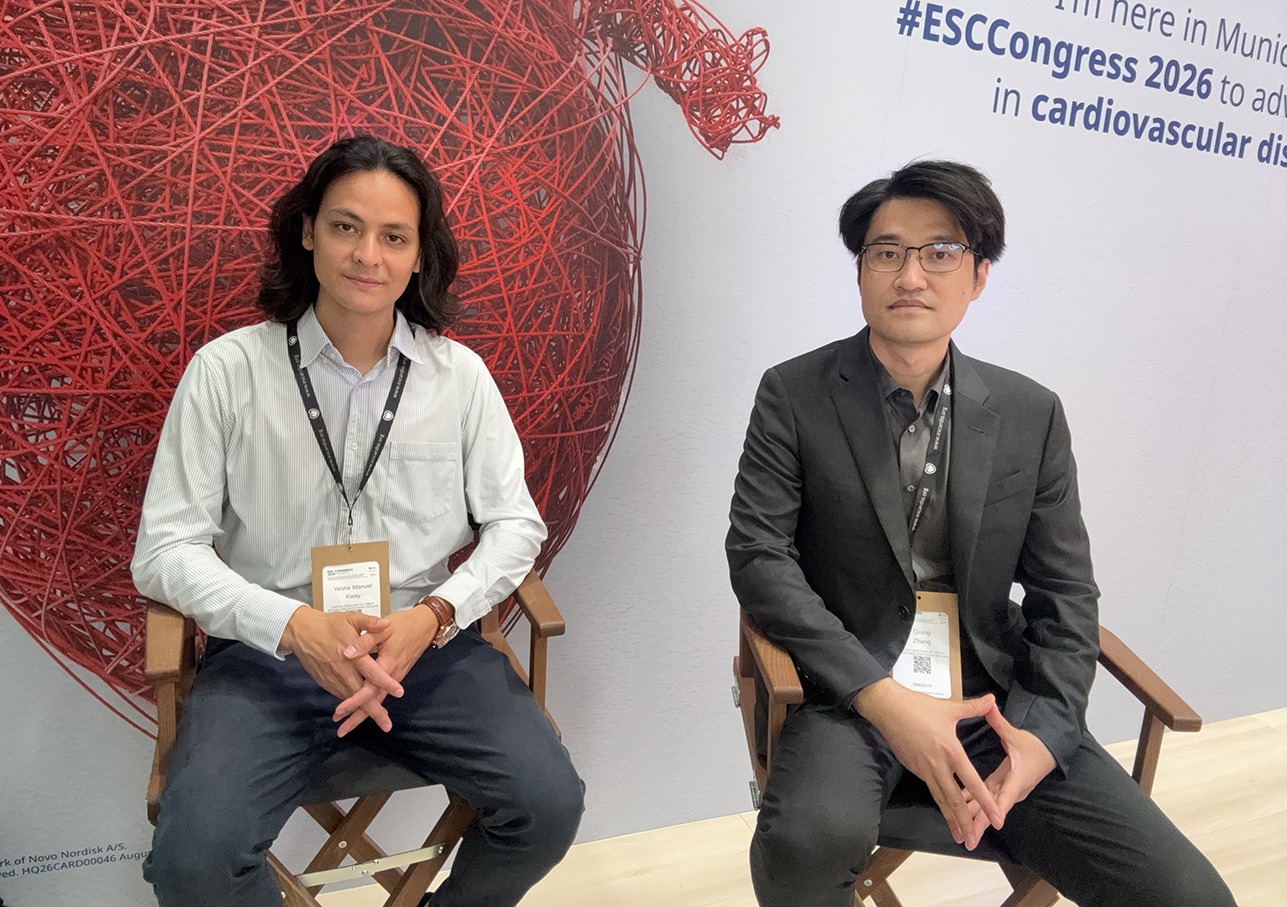 Pictured, l-r, Dr Yeshe Kway and Professor Qiang Zhang
The paper, published in the European Heart Journal, was presented as Late-Breaking Science at the European Society of Cardiology Congress in Munich this week. Professor Zhang, Associate Professor of AI in Cardiovascular Imaging, is a joint senior author of the study, with lead author Dr Yeshe Kway, Medical Data Scientist at the University of Oxford.
The research analysed detailed magnetic resonance imaging (MRI) scans from almost 25,000 participants in the UK Biobank, looking at fat stored in and around different parts of the body, including the liver, pancreas, heart, muscles and abdomen. They identified six distinct patterns of fat accumulation, each associated with different characteristics of body composition, changes in the structure of the heart and future risk of disease.
The findings suggest that familiar measures such as body mass index (BMI) only tell part of the story. Two people with a similar BMI may have very different patterns of fat accumulation in their organs and tissues, and, as a result, different risks of developing cardiometabolic diseases.
Dr Kway said: “In this study, we wanted to build a more holistic picture of how fat is distributed across various organs and tissues, and determine whether this could help us better understand differences in future disease risk. By identifying different patterns of fat build-up and linking them to changes in the heart and risk of cardiometabolic diseases, we hope that this approach could ultimately help shift healthcare from reacting to established disease towards earlier, more personalised prevention based on an individual’s risk profile.”
Professor Zhang adds: “This study demonstrated how big data approaches at population scale can unveil more insights about patterns of fat distribution and how they contribute to disease risks.
“We believe our findings support a more personalised approach to assessing health risks related to body fat distribution. Rather than treating excess weight as a single condition, we may need to consider which organs are affected, how fat is distributed and whether muscle health is also reduced.”
“Ultimately, this is aimed at identifying those at risk much earlier, allowing us to use more targeted prevention and treatment approaches for many common cardiometabolic diseases.”
The study, Mapping organ fat distribution and body composition: towards precision profiling of cardiometabolic disease risk, was published in the European Heart Journal on 31 August.